Collect Web3 history. Then play it.
A 200-card first season built for pack discovery, fixed-edition ownership, open trading, and a real digital TCG.For once, the product's being built before the mint.
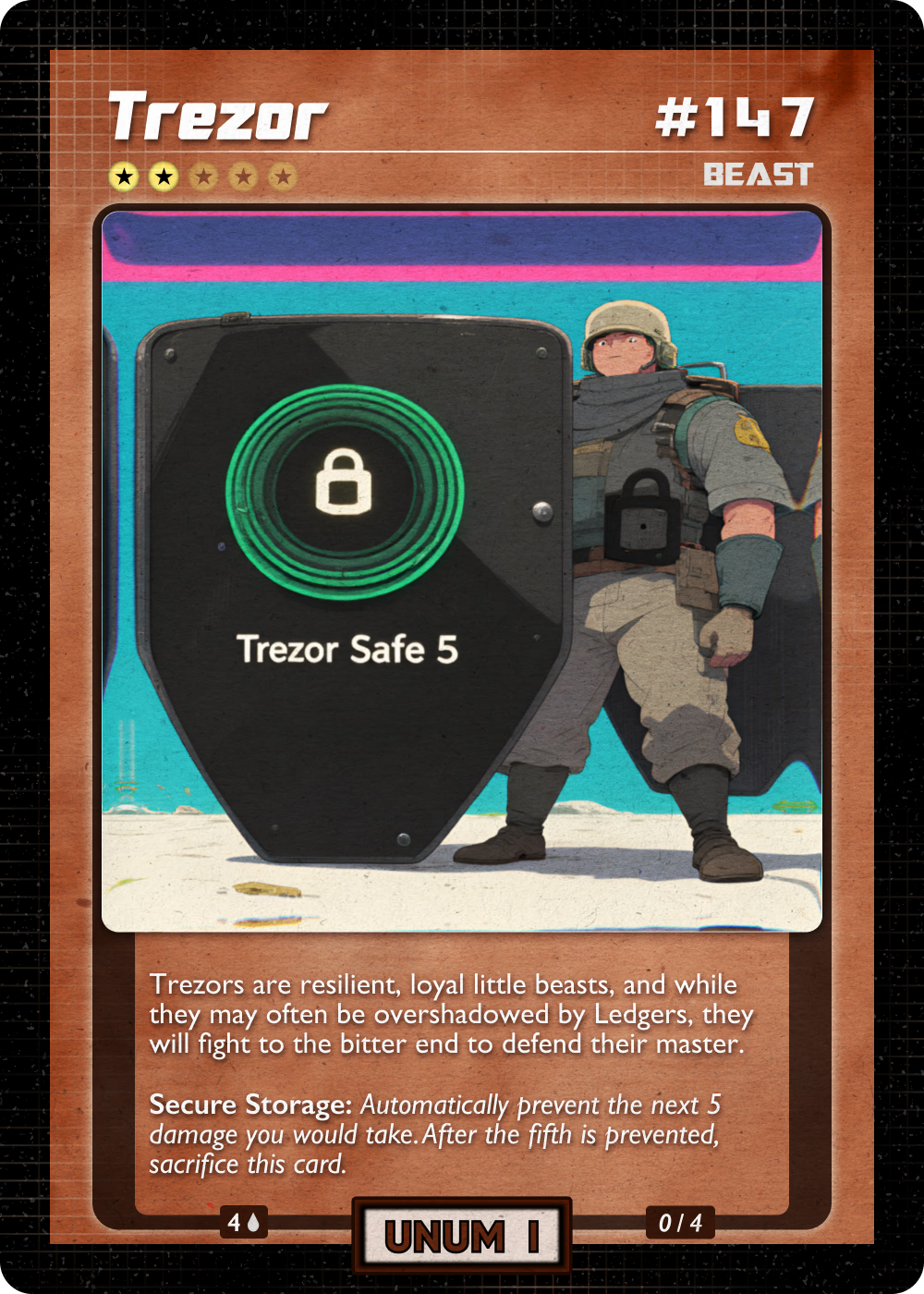
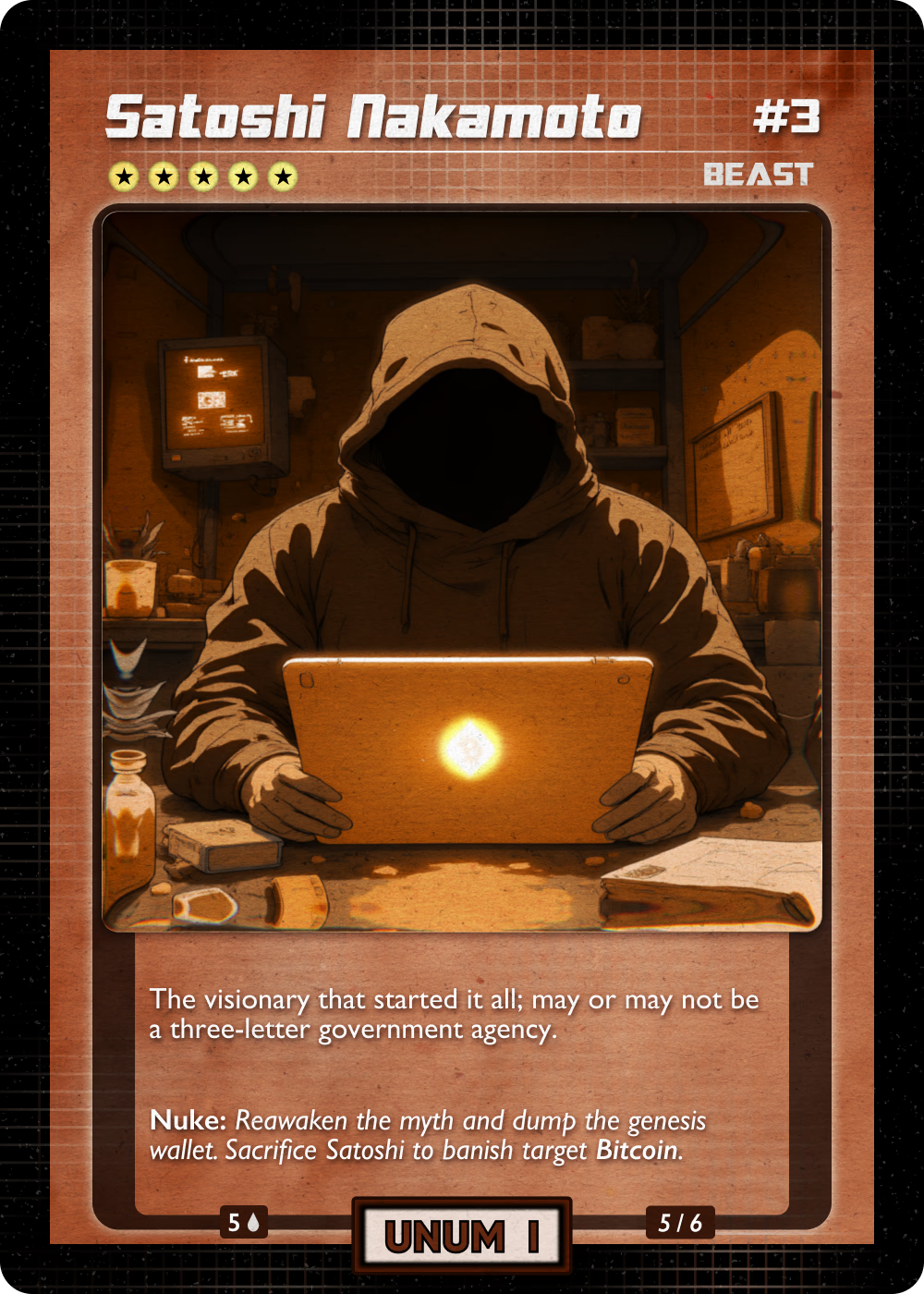
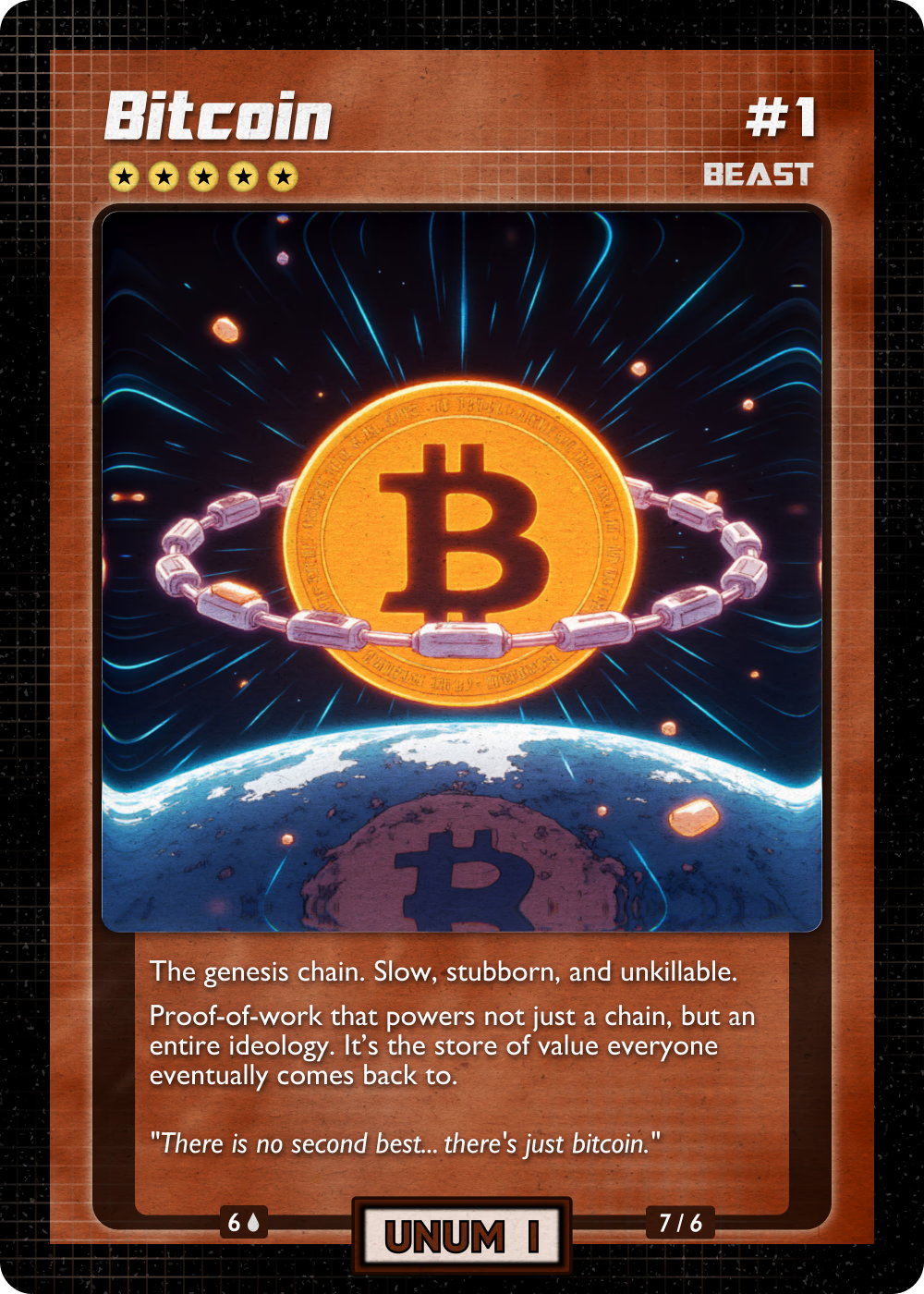
Product proof
Built first. Minted after.
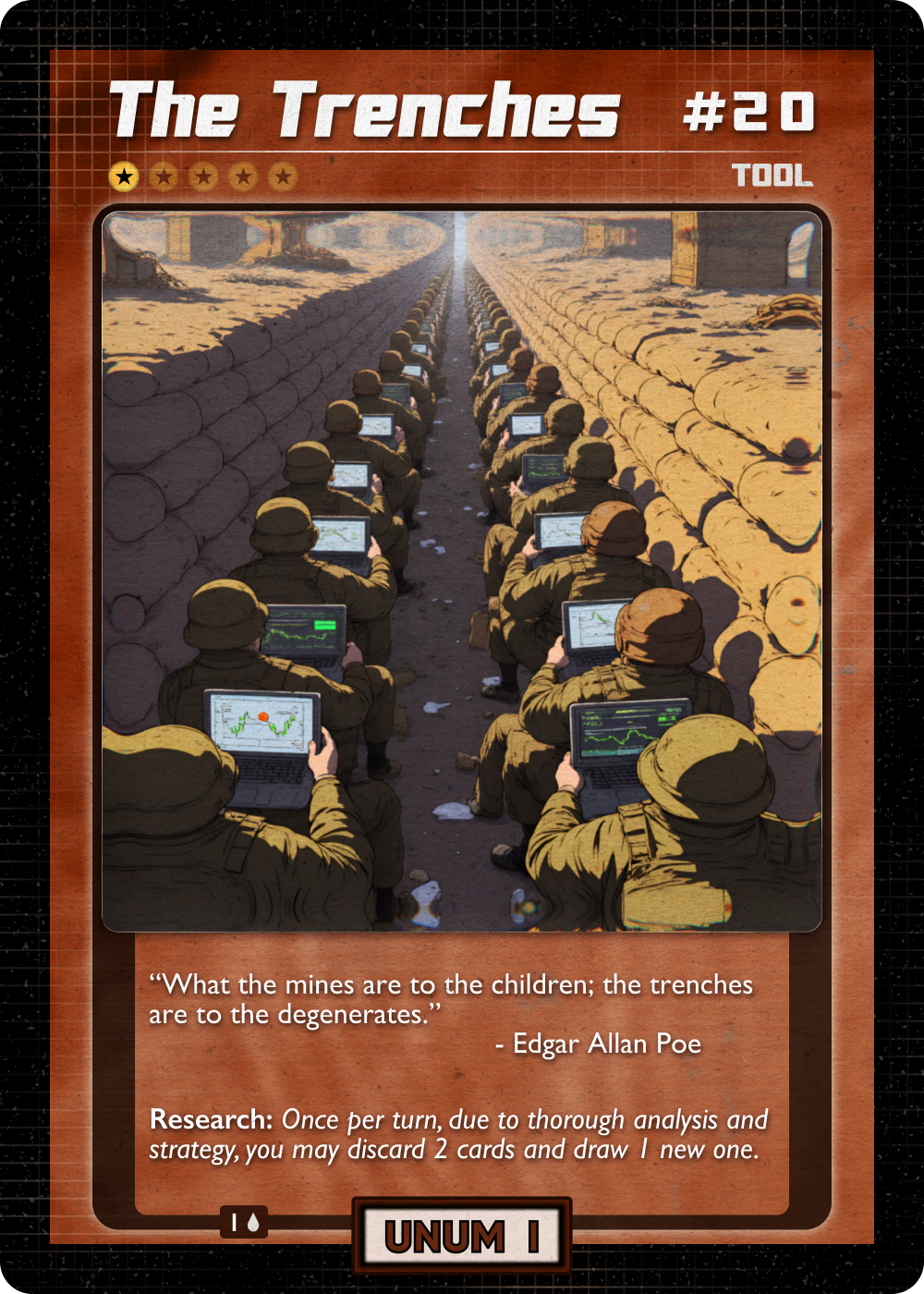
Every normal card has a job at the table, not just a slot in a wallet.
- 200
- Numbered Season 1 cards
- Complete
- Card artwork and definitions
- Playable
- Every normal card
- Working
- Digital TCG and rules
Fixed editions
Higher level. Tighter supply.
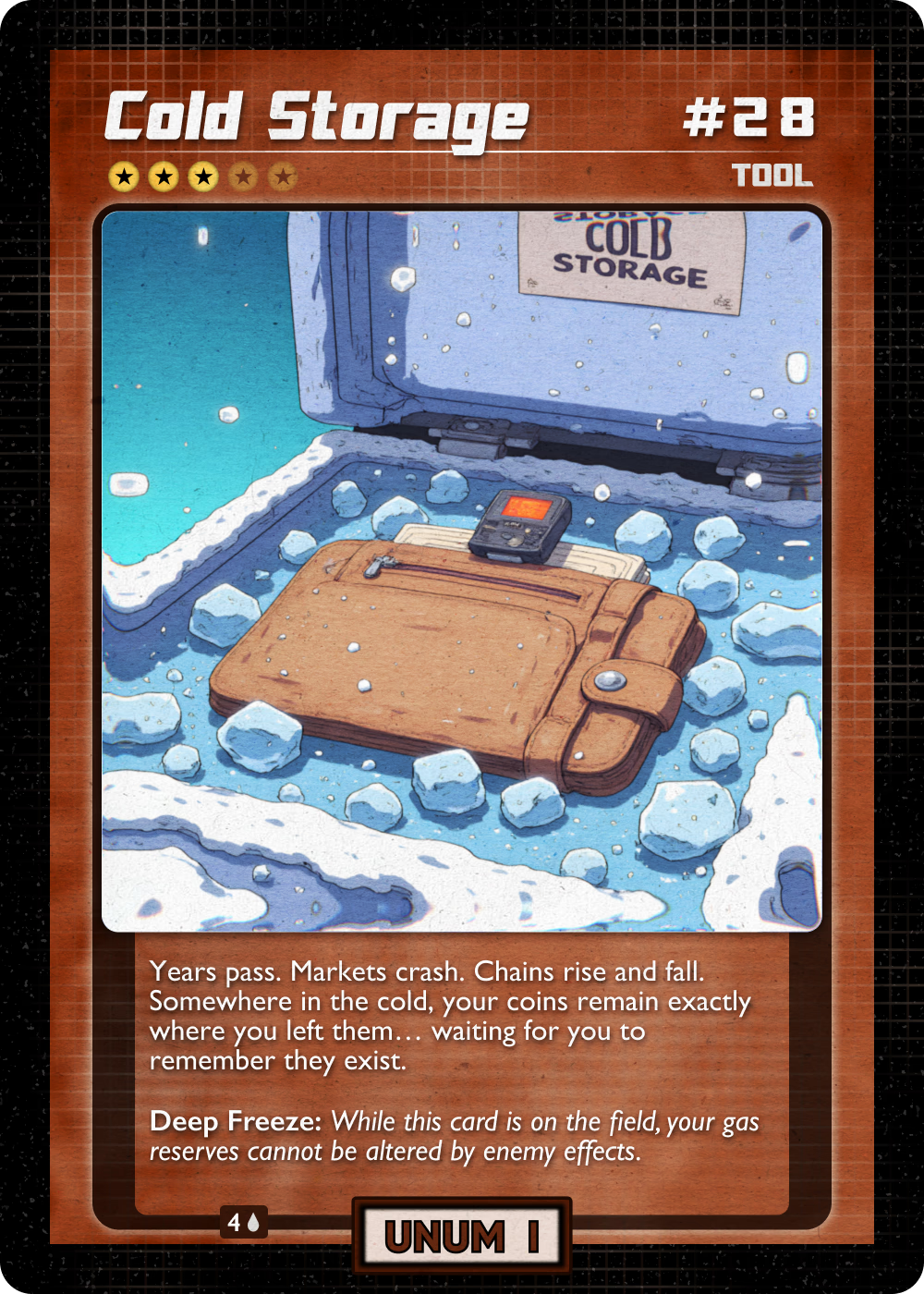
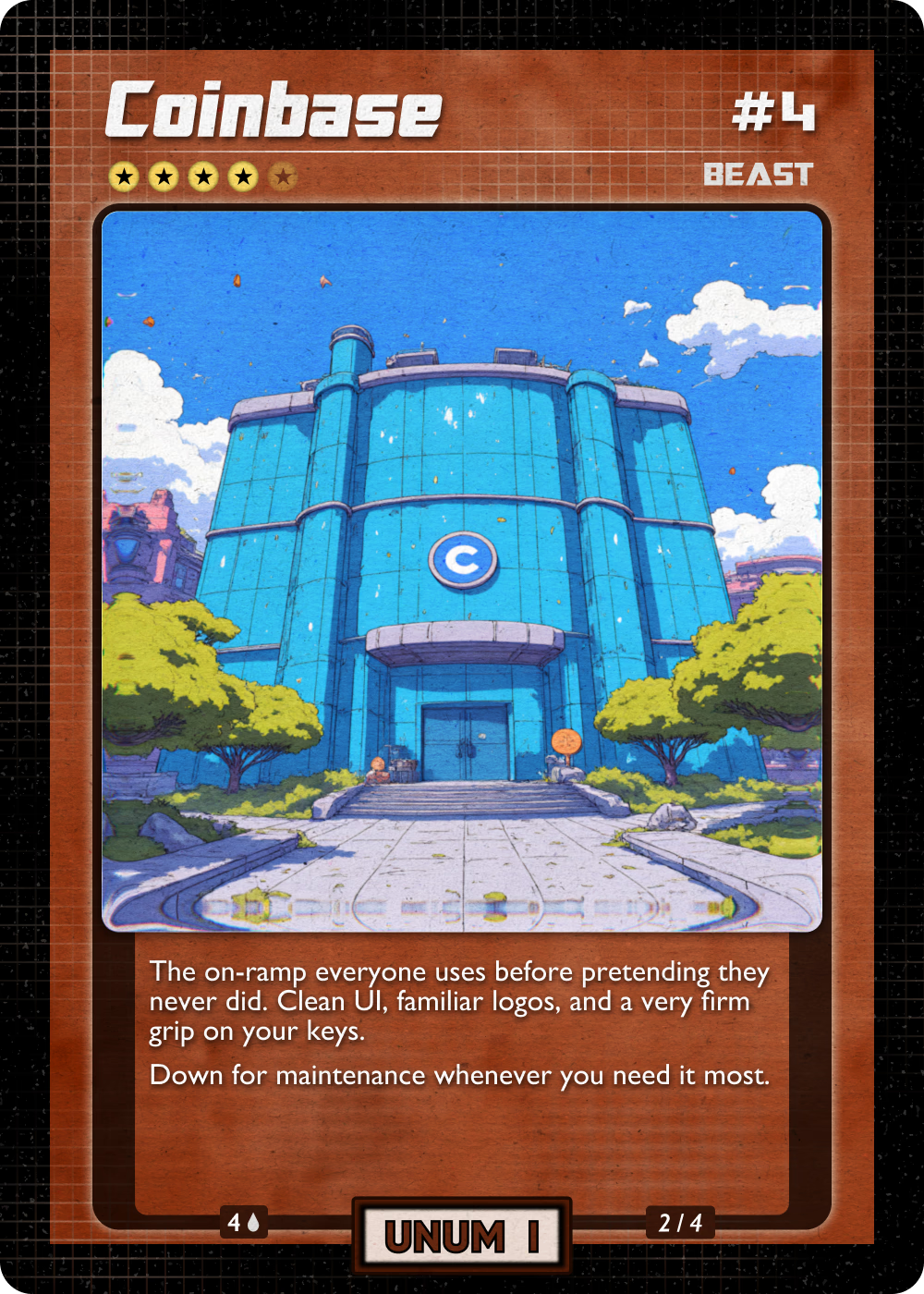
New seasons
Future seasons mainly introduce new cards and expand the playable archive.
Reprints
If a familiar card returns, it becomes a new edition with its own season badge, onchain edition identity, artwork or treatment, and fixed supply.
Originals stay original
A reprint never adds copies to an existing edition. Season 1 supply stays Season 1 supply.
Chase pulls
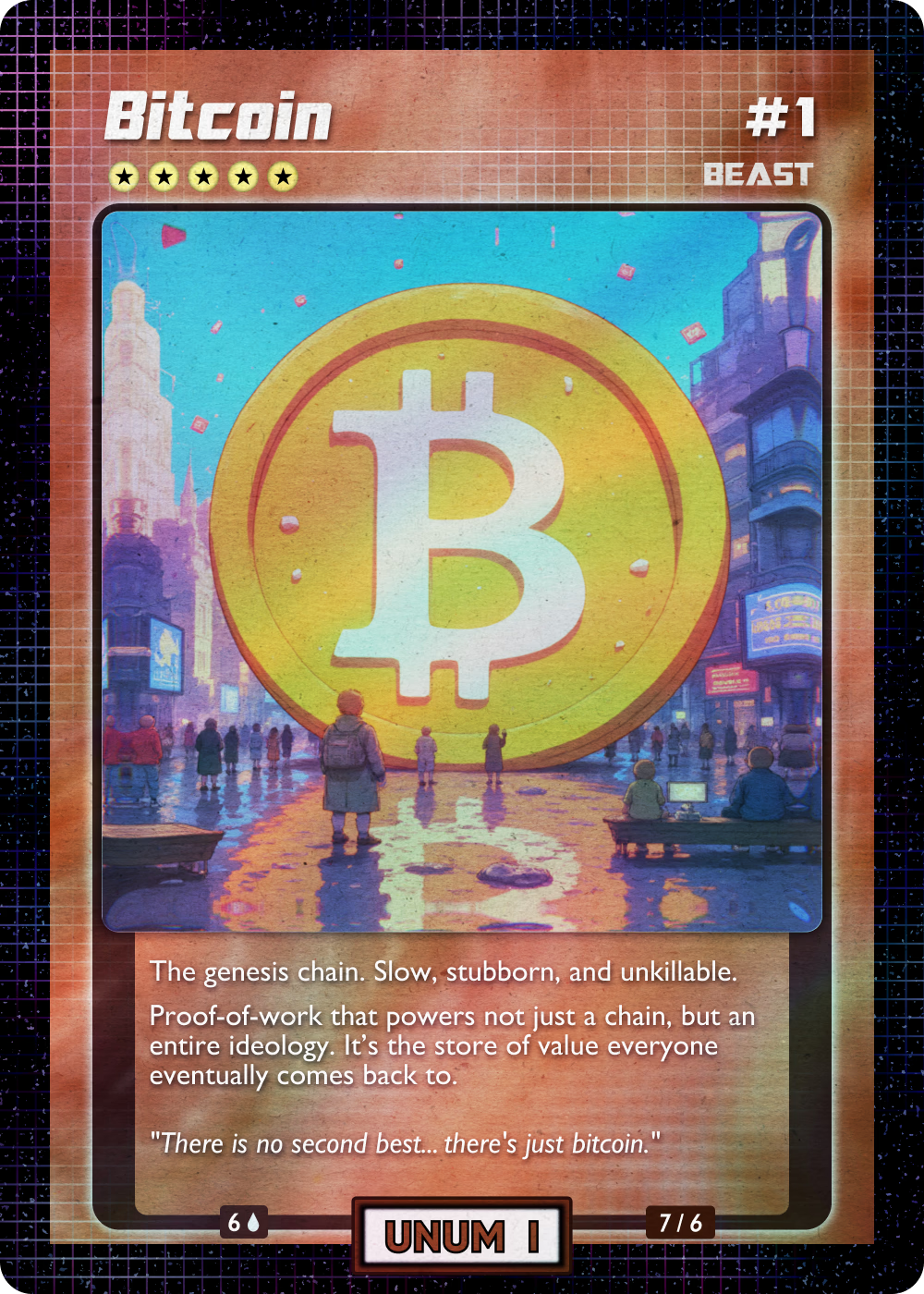
Same card. Different pull.
Bitcoin #001
HODL #046
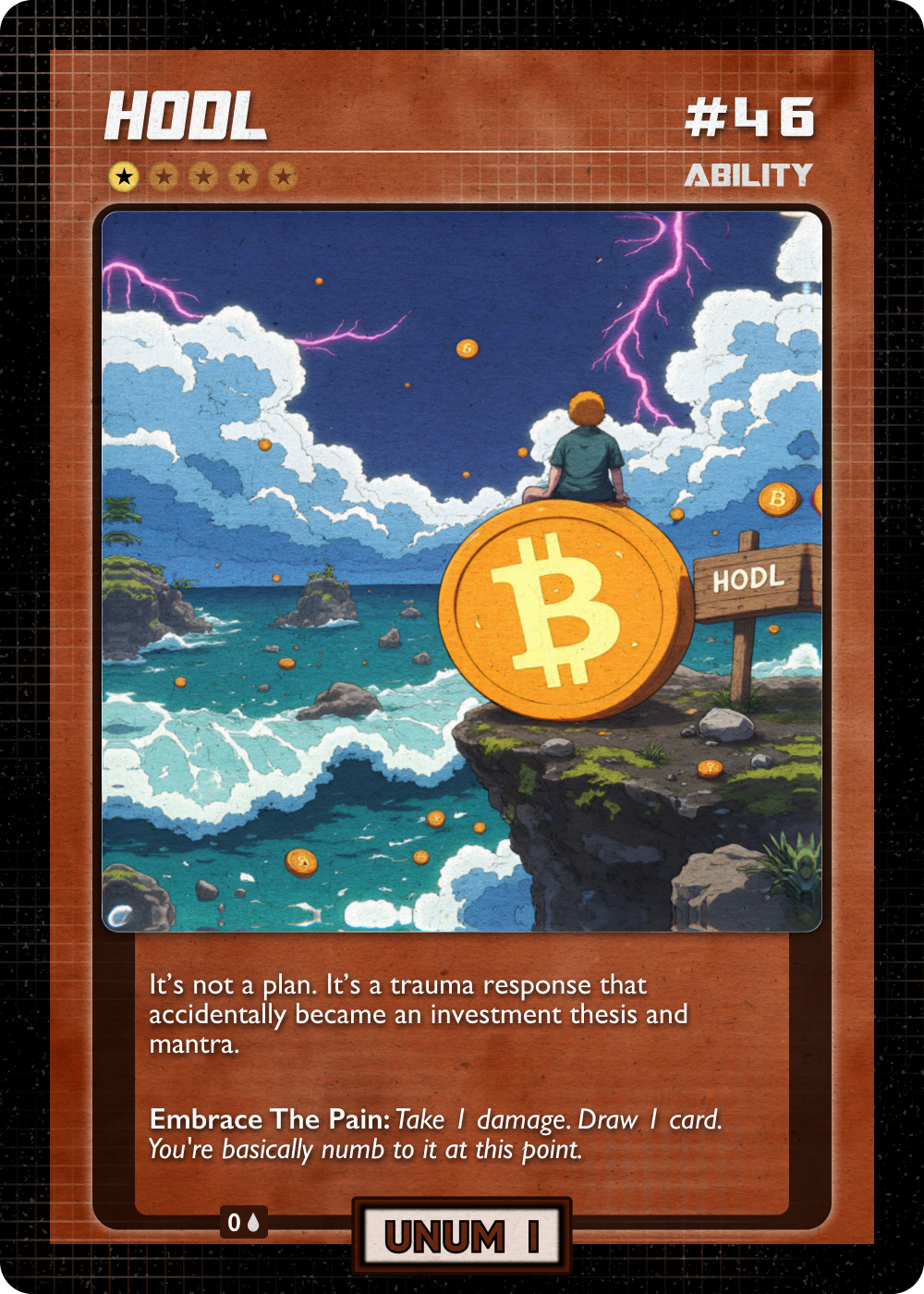
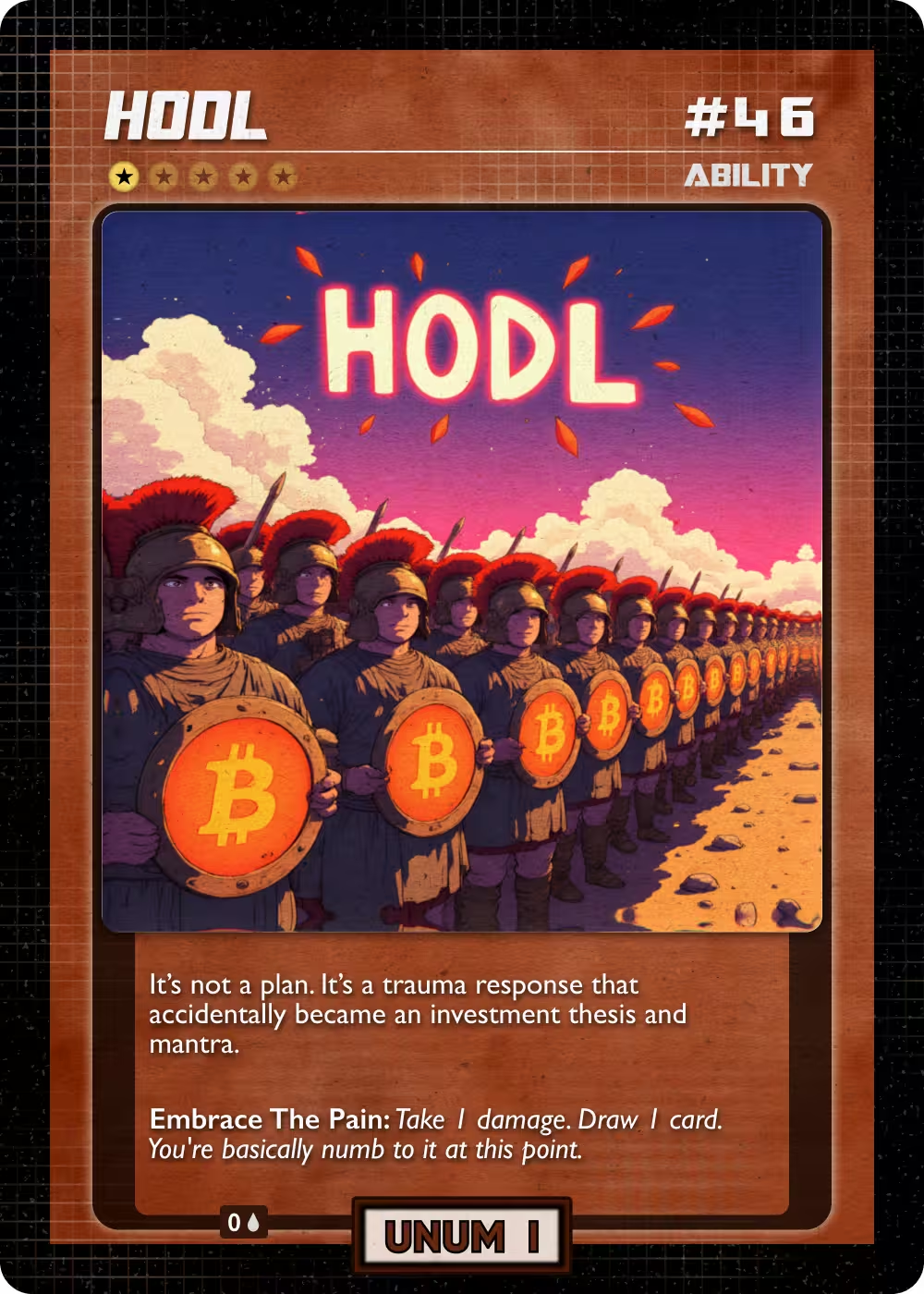
Variants do not inflate an edition. If a holo or alternative-art copy exists, it replaces a standard copy inside that card's already fixed supply.
Packs
Keep it sealed. Or burn it for the pull.
Pack NFTs
Each season or pack type receives its own pack NFT version. Keep it sealed, transfer it, or trade it when markets go live.
Rip on UNUM
Burn the pack
Opening a pack burns that pack NFT on our site and randomly determines the cards inside.Card NFTs
The pulled cards are minted into the separate card collection, ready to own, trade, collect, and use in the game.
Sealed packs stay packs. Ripped packs become a random pull of cards. The choice is yours.
The model
Physical TCG logic, rebuilt for the internet.
Trading card DNA
- Seasonal sets and original printings
- Sealed packs and uneven rarity
- Chase cards, holos, and alternative art
- Set collecting, trading, and deckbuilding
Digitally native
- Verifiable edition supply and provenance
- Direct ownership and global transferability
- Open secondary trading when the market launches
- Your grail never lives at the behest of a PSA grader
Own the lore
Collect the protocols, personalities, communities, victories, hacks, memes, meltdowns, and absurdities that shaped Web3.
Rep your corner
Build a collection around the ecosystems, founders, narratives, and bags you actually care about.
Chase the pull
Rip packs for higher-star cards, holographics, alternative art, and the rare treatment that becomes your grail.
Trade the market
Buy, sell, swap, complete sets, or hold sealed packs when open trading goes live.
Build and play
Turn the collection into a deck. Every normal card belongs to the same working digital TCG.
The original season
Start at card #001.
Future seasons expand the archive. They do not rewrite the fixed supply or original identity of Season 1 editions.
Explore Season 1Current status
Mint prep is live. The mint is not.
Explore the public catalog and create your account now. Season 1 cards are still undergoing final testing and balancing before packs, ownership, and open trading go live.- LivePublic catalog and accounts
- TestingFinal card balance
- NextSeason 1 packs and ownership
Collector FAQ
Supply, variants, and the mint.
What makes a UNUM card scarce?
Each card edition has a fixed maximum supply. Higher-star cards have fewer copies than lower-star cards, while holographics and other special variants create additional chase within that fixed structure.
Can an existing edition's supply ever be increased?
No. Once an edition is created, its maximum supply is locked and will never be increased.
What happens when a card is reprinted?
A reprint becomes a new edition with its own onchain identity. It may use new artwork, a different season badge, or another visible treatment. It never adds copies to the original printing.
How do holographics and alternative-art cards work?
Special variants use distinct treatments and onchain identities. A holo or alternative-art copy replaces a standard copy inside that card's fixed edition supply. It is not extra supply.
Can rare variants come from normal packs?
Yes. Holographics, special editions, and rare variants may be pulled from normal packs. Some variants may have only one copy.
Are the cards part of a real game?
Yes. Every normal Season 1 card belongs to a working digital TCG. The cards, gameplay definitions, and rules were built before the public mint and are being tested and balanced now.
Can packs and cards be traded?
Yes, once ownership and market features are live. Packs and cards belong to separate NFT collections. You can keep or trade a pack sealed, or burn it on UNUM to mint its randomly selected cards into the card collection.
What can I do before the mint?
Explore the Season 1 catalog, create an account, connect your preferred wallet, and link supported social profiles so you are ready for future mint access.
Is UNUM affiliated with everyone represented?
No. UNUM is an (un)official cultural archive. Inclusion does not imply endorsement or affiliation unless UNUM explicitly says otherwise.
Game overview
A tactical duel with no disposable turns.
- 24
- Starting lifepoints
- 50
- Cards per deck
- 5
- Opening hand
- 3
- Core card types
How to play
From opening hand to final point.
- 01
Build your deck
Bring exactly 50 cards. There are currently no copy limits, so your strategy—not a rarity rule—sets the mix.
- 02
Develop the board
Gain Gas, play BEASTs and TOOLs, and use ABILITY cards to change the state of the match.
- 03
Choose every action
Attack lifepoints, challenge a BEAST, activate an effect, discard, or conserve your turn for a pass-for-gas bonus.
- 04
Reduce 24 to zero
The first player to reduce the opposing player from 24 lifepoints to 0 wins the match.
Rules reference
The current public rules, in one place.
Match setup
A two-player match begins with a shuffled deck, a small hand, and no stored resources.
- Starting state
- Each player starts at 24 lifepoints, 0 Gas, and 5 cards in hand.
- First player
- The starting player is chosen at random, then begins normally by drawing 1 and gaining 1 Gas. Their first action phase therefore opens with 6 cards.
- Winning
- Damage reduces lifepoints. A player loses when their lifepoints reach 0; healing cannot raise them above 24.
- Mulligans
- There is no formal mulligan rule in the current ruleset.
Decks and zones
Every card occupies one primary zone, and empty decks recycle instead of causing a loss.
- Deck
- A deck contains exactly 50 cards and currently has no copy limit. When an empty deck must draw, its graveyard is shuffled into a new deck and the draw continues.
- Hand
- Cards in hand may be played, discarded, or revealed when an effect allows it. There is currently no default hand-size limit.
- Field
- BEASTs and TOOLs use separate field zones. There is currently no default capacity limit for either field.
- Graveyard and banished
- Destroyed, discarded, sacrificed, and resolved ABILITY cards normally reach the graveyard. Banished cards leave the normal zones and return only if an effect explicitly permits it.
Card types
Three card types divide combatants, persistent utility, and immediate effects.
- BEAST
- A field card with ATK and DEF. It may attack or use a manual effect, normally once per eligible turn. A newly played BEAST cannot take a manual action until its controller's next turn unless an effect overrides that lockout.
- TOOL
- A persistent field card that may stand alone or attach to one BEAST. TOOLs are not normal combat targets and may use an available manual effect on the turn they are played.
- ABILITY
- A non-permanent card that resolves its effect immediately, then goes to its owner's graveyard.
- Attachments
- A BEAST may carry any number of attached TOOLs, but each TOOL has only one host. If the host leaves play, its attached TOOLs go to the graveyard.
Gas, turns, and actions
Gas carries between turns; permanent cards refresh their own manual action allowance.
- Gas
- Players gain 1 base Gas at the start of each turn. Unused Gas carries over, cannot fall below 0, and pays the listed costs of cards and effects.
- Level and play cost
- A card's level and Gas cost are separate values. Gas cost is the ordinary price to play it; level may be checked by effects and determines the potential pass-for-gas bonus.
- Turn structure
- Start by drawing 1, applying base Gas income, and resolving start-of-turn effects. Then take legal actions until ending the turn; end-of-turn effects and expirations resolve before control passes.
- Manual actions
- Attacks and activated effects consume the acting BEAST or TOOL's shared manual-action allowance. Playing cards and voluntary discards are also player-chosen actions. Automatic effects consume no manual action.
- Defending player
- The non-active player normally takes no actions. Only a card that opens a specific reaction window can allow a response; UNUM does not use a general open stack or priority round.
Combat and stats
BEASTs can pressure lifepoints directly or compare their attack against an opposing defense.
- ATK, DEF, and Power
- ATK sets direct damage and attacking strength. DEF resists BEAST attacks. Power is the derived total ATK + DEF and may be referenced by effects.
- Direct attack
- A BEAST may attack the opposing player's lifepoints even while enemy BEASTs are on the field. It deals damage equal to its ATK.
- BEAST combat
- Compare attacker ATK with defender DEF. Greater destroys the defender; equal destroys both; lower destroys the attacker.
- Group attack
- Up to 2 BEASTs may combine ATK against one opposing BEAST. Greater destroys the defender, equal destroys every involved BEAST, and lower destroys both attackers. Each attacker spends its action.
Effects and timing
Structured mechanics—not printed prose—determine how every effect behaves in a match.
- Manual and automatic
- Manual effects are deliberately activated and use an available action. Automatic effects are event-triggered or continuously passive and do not consume one.
- Timing windows
- Effects may occur when played or used; at turn start or end; around attack declaration and resolution; while on the field or attached; when another card is played; or when a field card reaches the graveyard.
- Ordering
- Effects resolve sequentially, never simultaneously. If several trigger together, the active player's effects resolve first, then the defender's; each player's older sources resolve before newer ones.
- Duration and failure
- Counted durations expire during end-of-turn handling; condition-based effects end when their condition stops being true. If an effect cannot complete, its remaining valid parts resolve unless it explicitly requires full resolution.
Costs, targets, and choices
Legality is checked before commitment, while costs and targets remain mechanically distinct.
- Costs
- Every required cost must be payable before an action begins. The acting player pays the full cost atomically; selecting a card to discard or sacrifice as payment is not targeting.
- Targets
- Only legal targets may be selected. Once committed, a target is not rechecked merely because a property changes, but the effect fails against it if the card has left the required zone.
- Choices
- Only legal modes are offered. If one mode remains it proceeds automatically; if several remain the responsible player chooses.
- Resolution
- Required costs are paid before ordinary target selection unless a specific target-dependent cost defines an exception. Resolution steps then occur in their authored order.
Game terms
Similar-looking zone changes have intentionally different names and rules.
- Discard
- Send a card from hand to graveyard. A voluntary discard is a player action; a forced discard is an effect result.
- Sacrifice
- Send one of your controlled field cards to the graveyard, but only when an effect permits or requires it.
- Destroy
- Send a field card to its owner's graveyard. Enemy removal is its primary current use.
- Banish
- Remove a card from the normal game zones. It returns only when a future effect explicitly says so.
- Pass for Gas
- If your turn's entire manual-action history is exactly one voluntary hand discard, you may end the turn to gain Gas equal to that card's level. The Gas is awarded on end turn, not on discard.
Modifiers, names, and Immutable
Ongoing effects preserve their source and layer so interactions stay deterministic.
- Stat layers
- Ordinary modifiers change a BEAST's underlying stats. Attached TOOL stat bonuses overlay that result, so a later ‘becomes’ effect does not erase the attached bonus.
- Leaving play
- A card that leaves the field loses field modifiers and returns to its base definition unless an effect explicitly creates another rule.
- Active names
- Name changes are tracked alongside a card's original name. Checks are case-insensitive, token-aware, and match any currently active name.
- Immutable
- Immutable protects a card's ATK/DEF, native effects, and name from effect changes. It does not prevent targeting, destruction, banishing, zone movement, Gas-cost changes, or attached TOOLs.
- Native and granted
- A card's own effects are native. Effects supplied by another card are granted; disabling native effects does not disable attached TOOL effects.
Game FAQ
Common table questions.
Can I play UNUM now?
Gameplay is in limited early-access testing while rules, balance, and match presentation are refined. The public lobby and broad game release are not live yet.
Do I need to clear the opposing field before attacking?
No. An eligible BEAST may attack opposing lifepoints directly or attack an opposing BEAST. Some card effects may still restrict or redirect an attack.
Can I act during my opponent's turn?
Not by default. A card must explicitly permit a reaction in a specific timing window. UNUM does not currently use a general-purpose response stack.
What happens when my deck is empty?
When you must draw from an empty deck, your graveyard is shuffled into a new deck and the draw continues. Emptying your deck is not a loss condition.
Is the wording printed on a card the final authority?
No. Printed wording explains intent, but matches use normalized structured effect data. If presentation and runtime behavior ever disagree, the structured rules and current implementation govern play while the copy is corrected.